Repmold: A Modern Manufacturing Solution for Fast, Accurate, and Cost-Effective Part Production
In the evolving world of manufacturing, innovation continues to shape how products are designed and produced. Traditional manufacturing processes often involve complex machinery, long production cycles, and significant upfront costs, making it challenging for smaller businesses and independent creators to scale their operations. Repmold, a relatively new manufacturing technique, is changing this landscape by combining two fundamental concepts—replication and molding—into a fast, efficient, and cost-effective process. This modern method allows for the creation of accurate, repeatable parts with minimal resources, making it a valuable tool for a wide range of industries.
What Is Repmold?
Repmold is a fusion of two core principles: replication and molding. Replication refers to the act of copying an object, while molding involves shaping a material into a specific form. When these two concepts are integrated with digital technologies, the result is a streamlined manufacturing process that produces highly accurate and consistent parts. What distinguishes Repmold from conventional methods is its integration of both digital technology and physical molding, offering improved adaptability, speed, and accuracy.
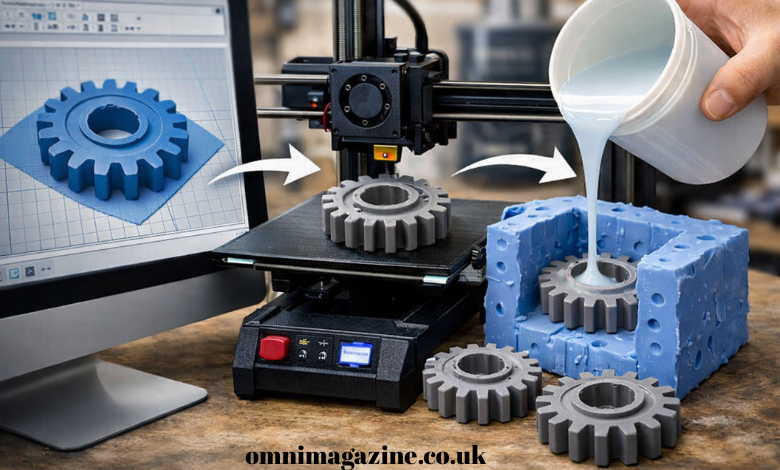
In simpler terms, Repmold is a process that starts with a digital design, then uses advanced technologies like 3D printing and molding materials such as silicone or resin to create molds, which are used to replicate parts. The outcome is a high level of accuracy and the ability to produce multiple parts with ease, significantly reducing the time and cost typically associated with traditional manufacturing processes.
The Repmold Process: Step-by-Step
The Repmold process is composed of several stages that combine digital design, 3D printing, and molding techniques. These steps are as follows:
- Digital Design Creation: The first step in the Repmold process is the creation of a digital design. This design is typically produced using computer-aided design (CAD) software. Designers can create highly detailed and precise models based on their specifications. The digital nature of this design ensures that the parts will be accurate and repeatable, with all the necessary dimensions and features defined in the file.
- 3D Printing the Master Model: Once the design is finalized, the next step involves 3D printing. The digital design is converted into a physical model using a 3D printer, which acts as the master model for the molding process. 3D printing allows for the rapid and precise creation of complex shapes that might be difficult or impossible to achieve using traditional manufacturing techniques.
- Mold Formation: With the master model in hand, the next step is to create a mold. This is done by surrounding the 3D printed model with a molding material such as silicone, resin, or other casting materials. The mold captures every detail of the master model, ensuring that subsequent copies produced from this mold will be highly accurate and identical to the original.
- Casting and Replication: After the mold has hardened, it can be used to create multiple copies of the part. The mold can be filled with a variety of materials, depending on the desired properties of the final part. These materials can include plastics, metals, or even rubber, allowing for a wide range of applications. The replication process is fast and cost-effective, making it ideal for small production runs or prototyping.
- Finishing and Quality Control: Once the replicated parts are removed from the mold, they may undergo finishing processes to remove any excess material, smooth rough edges, or add additional details. The final product is then inspected for quality and consistency, ensuring that it meets the required standards before being sent out for use or distribution.
Why Repmold Is a Game Changer for Small Businesses and Creators
One of the primary reasons Repmold is gaining traction is its ability to provide faster production times and lower costs compared to traditional manufacturing techniques. Small businesses and independent creators often struggle with the upfront investment required for conventional manufacturing methods, especially when it comes to molds and equipment. Repmold, however, eliminates many of these barriers.
With Repmold, businesses no longer need to invest in expensive tooling or worry about the long lead times associated with traditional mold-making processes. The ability to create a digital design and 3D print the master model dramatically reduces both time and cost, making it possible for small-scale manufacturers to create high-quality products without the need for large-scale production facilities.
Furthermore, Repmold allows for flexibility. Because molds can be created quickly and inexpensively, it is easy to modify designs or create custom parts without significant delays or additional costs. This adaptability is especially beneficial for industries that require frequent design changes or small batch production.
Applications of Repmold
Repmold is versatile and can be applied to a wide range of industries. Here are some of the common uses for Repmold in various sectors:
- Prototyping: Repmold is an excellent tool for rapid prototyping. Designers and engineers can quickly produce prototypes of their products to test form, fit, and function before committing to large-scale production. This reduces the risk of costly mistakes and allows for more iterative development.
- Small Batch Production: For businesses that do not require large volumes of products, Repmold is a great solution. The ability to replicate parts efficiently makes it ideal for small batch production, where the cost of traditional manufacturing methods may be prohibitive.
- Custom Parts and Accessories: Repmold is perfect for creating custom parts or accessories. For example, creators can design one-of-a-kind products for specific applications or customers, ensuring that each part is unique and tailored to their needs.
- Replacement Parts: In industries where replacement parts are often required but are difficult or expensive to obtain, Repmold can be used to create custom replacement parts on demand. This is particularly useful in the automotive, aerospace, and machinery sectors, where parts may be rare or no longer in production.
- Art and Design: Artists and designers can take advantage of Repmold to create intricate designs and sculptures. The precision and flexibility offered by this method allow for the creation of complex forms that might be difficult to achieve using other techniques.
- Medical and Dental Industries: Repmold is increasingly being used in the medical and dental fields to create custom implants, prosthetics, and dental molds. The high level of accuracy and the ability to quickly produce small quantities of these specialized parts makes Repmold an attractive option for these industries.
Benefits of Repmold
Repmold offers numerous advantages over traditional manufacturing techniques. These benefits include:
- Lower Costs: Traditional manufacturing methods often require significant upfront investment in molds, machinery, and materials. Repmold, however, reduces these costs by using 3D printing and digital design to create master models and molds more efficiently. The result is a more affordable process, especially for small businesses and startups.
- Faster Production: Repmold speeds up the production process by eliminating the need for time-consuming mold-making and tooling steps. Designers can create digital models and print them quickly, reducing the time from concept to finished product.
- Customization and Flexibility: Repmold allows for easy design modifications and the creation of custom parts, making it ideal for industries that require personalized products or small batch runs.
- Reduced Waste: Traditional manufacturing processes often result in material waste due to excess material being cut or discarded. Repmold reduces waste by using additive manufacturing techniques, where material is deposited only where needed.
- Increased Accuracy: The use of digital tools ensures that Repmold parts are highly accurate and consistent. The digital design and 3D printing process minimizes human error and ensures that each part is identical to the original.
Conclusion
Repmold represents a significant advancement in manufacturing, offering a more accessible and efficient way to create high-quality, repeatable parts. By combining the concepts of replication and molding with digital tools, Repmold provides small businesses, creators, and industries with a modern solution for fast and cost-effective production. The process’s flexibility, accuracy, and affordability make it a valuable tool for a wide range of applications, from prototyping and small batch production to custom parts and medical devices. As digital manufacturing continues to evolve, Repmold is poised to play a pivotal role in shaping the future of production.


Post Comment